
Notice: Function _load_textdomain_just_in_time was called incorrectly. Translation loading for the acf domain was triggered too early. This is usually an indicator for some code in the plugin or theme running too early. Translations should be loaded at the init action or later. Please see Debugging in WordPress for more information. (This message was added in version 6.7.0.) in /var/www/vhosts/catom.site/aift.catom.site/wp-includes/functions.php on line 6131

Notice: Function _load_textdomain_just_in_time was called incorrectly. Translation loading for the limit-login-attempts-reloaded domain was triggered too early. This is usually an indicator for some code in the plugin or theme running too early. Translations should be loaded at the init action or later. Please see Debugging in WordPress for more information. (This message was added in version 6.7.0.) in /var/www/vhosts/catom.site/aift.catom.site/wp-includes/functions.php on line 6131

Notice: Function _load_textdomain_just_in_time was called incorrectly. Translation loading for the simple-custom-post-order domain was triggered too early. This is usually an indicator for some code in the plugin or theme running too early. Translations should be loaded at the init action or later. Please see Debugging in WordPress for more information. (This message was added in version 6.7.0.) in /var/www/vhosts/catom.site/aift.catom.site/wp-includes/functions.php on line 6131

Notice: Function _load_textdomain_just_in_time was called incorrectly. Translation loading for the wordpress-seo domain was triggered too early. This is usually an indicator for some code in the plugin or theme running too early. Translations should be loaded at the init action or later. Please see Debugging in WordPress for more information. (This message was added in version 6.7.0.) in /var/www/vhosts/catom.site/aift.catom.site/wp-includes/functions.php on line 6131

Notice: Function _load_textdomain_just_in_time was called incorrectly. Translation loading for the breadcrumb-navxt domain was triggered too early. This is usually an indicator for some code in the plugin or theme running too early. Translations should be loaded at the init action or later. Please see Debugging in WordPress for more information. (This message was added in version 6.7.0.) in /var/www/vhosts/catom.site/aift.catom.site/wp-includes/functions.php on line 6131

Notice: Function _load_textdomain_just_in_time was called incorrectly. Translation loading for the html5blank domain was triggered too early. This is usually an indicator for some code in the plugin or theme running too early. Translations should be loaded at the init action or later. Please see Debugging in WordPress for more information. (This message was added in version 6.7.0.) in /var/www/vhosts/catom.site/aift.catom.site/wp-includes/functions.php on line 6131
Intelligent Place Laboratory (IPL) - Faculty of Architecture and Town planning

Intelligent Place Laboratory (IPL)

HomeLabsIntelligent Place Laboratory (IPL)
Transform built environments from passive containers into active partners.

Background

Built environments have been traditionally considered as static containers in which people’s activities take place. Accordingly, they do not often meet the dynamic and evolving needs of their inhabitants. This may lead to diminished organizational performance, dissatisfied people, and over/under-utilized spaces. As buildings and cities become technologically enhanced, the symbiotic relationship between people and built environments is expected to change.

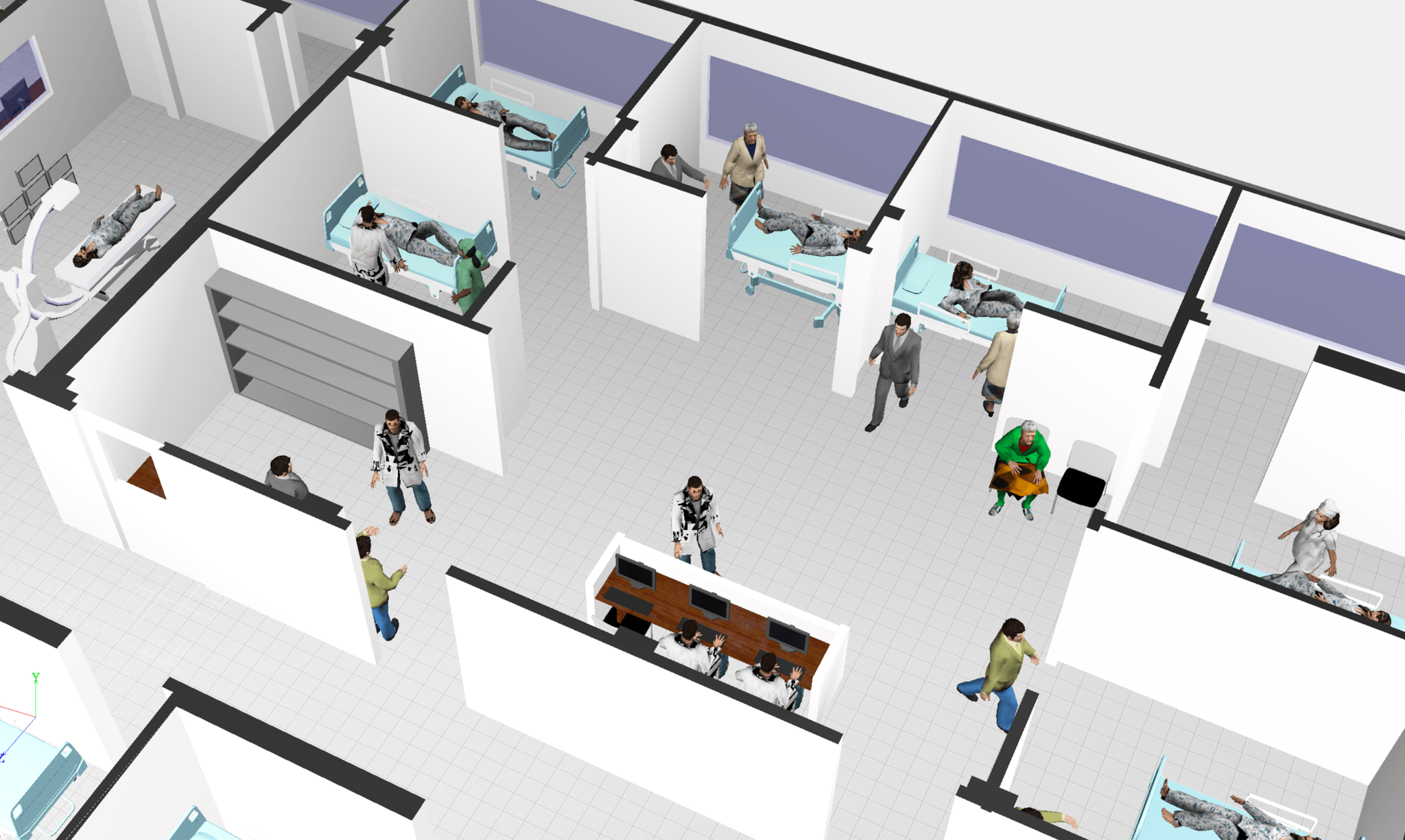
The Intelligent Place Laboratory (IPL) boosts research at the intersection of Architectural Design, Social Science, Operations Research, Cognitive Science, and Artificial Intelligence to explore, envision, design, and manage Intelligent Places that are aware of – and proactively cater to – the dynamic needs of their inhabitants. This is expected to transform built environments from passive containers into active partners in the lives of their inhabitants.

Research topics include:

  • Understanding the dynamic and mutual interaction between spaces, the people that inhabit them, and the activities they are engaged in
  • Predicting and analyzing the impact of alternative design and day-to-day management strategies on spatial, occupancy, and operational outcomes
  • Exploring the implications of AI-powered decision-support systems to design and manage mission-critical facilities, such as hospitals, workplaces, transportation facilities, and educational campuses

Our work is mostly conducted at the building level, using cutting edge technologies such as:

  • Sensors for detecting people occupancy, movement, and activities in buildings
  • Multi-agent modeling and simulation methods
  • Interactive data analytics and visualization strategies
  • Immersive mixed reality tools that combine virtual and augmented reality

Research outputs are published in interdisciplinary journals such as Automation in Construction, Architectural Science Review, Journal of Building Performance Simulation, Facilities, and Intelligent Buildings.

Location

Segoe Building , Room 506

Staff

Academic Director: Dr. Davide Schaumann